
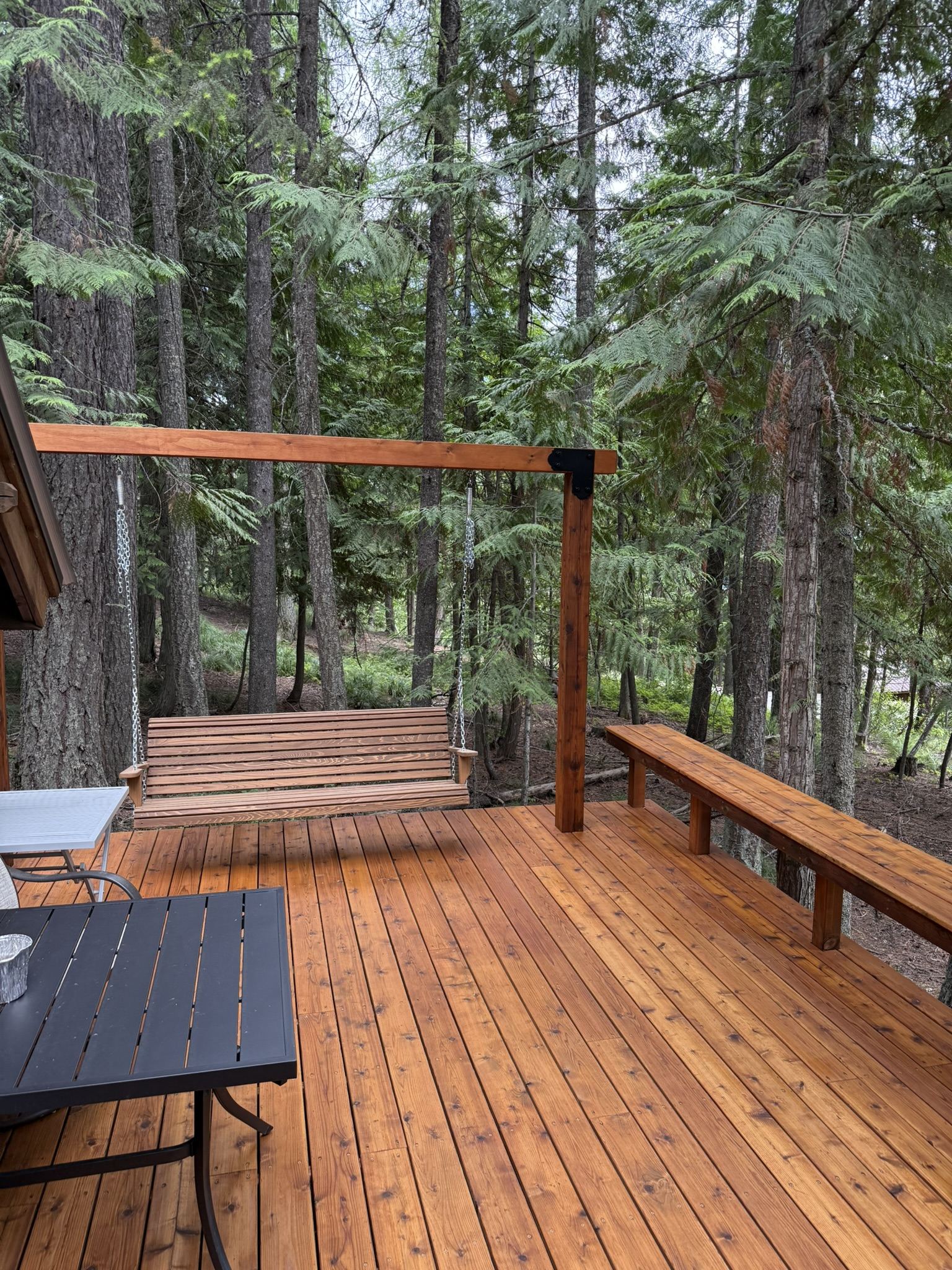
What this work involves
Most failed decks in the valley didn't fail at the boards — they failed at the footings, the ledger, or the flashing. We start by checking structure and drainage, then build up from there with fasteners and framing sized for snow load.
Whether you want a wraparound cedar deck off the great room or a low composite platform for a hot tub, we'll lay out seating, traffic, and sightlines before a single board gets cut.
Footings, ledger attachment, and flashing get inspected before we price a single board.
Joist spacing and hardware sized for Flathead winters, not a catalog average.
Grill, table, hot tub, traffic paths — planned before framing goes up.
Sound frame, tired boards? We resurface and re-rail instead of rebuilding.
Cable, metal, or wood rail with stairs and skirting detailed to match the house.
Materials we build with
Western red cedar
Warm, natural, and light. Best-looking option; wants a stain cycle every few years.
Composite
No sanding, no staining. Ideal around hot tubs and high-traffic decks where maintenance is a burden.
Pressure-treated
The value option, and the right pick for structure below the surface regardless of what the decking is.
Railing systems
Black metal balusters, cable rail, or wood — chosen for the view you're trying not to block.
Recent decks work
Common questions
If the framing and footings are sound, resurfacing and re-railing is far cheaper than a rebuild. We'll tell you honestly which one you're looking at.
Cedar looks better and costs less up front but needs staining. Composite costs more and asks nothing of you afterward. Around hot tubs we usually steer people to composite.
Often, depending on height and whether it's attached to the house. We handle the permit when one is required.
Yes — that needs framing designed for the filled weight, which is substantially more than a normal deck load. It has to be planned before framing, not after.
Ready to talk about your project?
Call and we'll walk through what yours would take.