
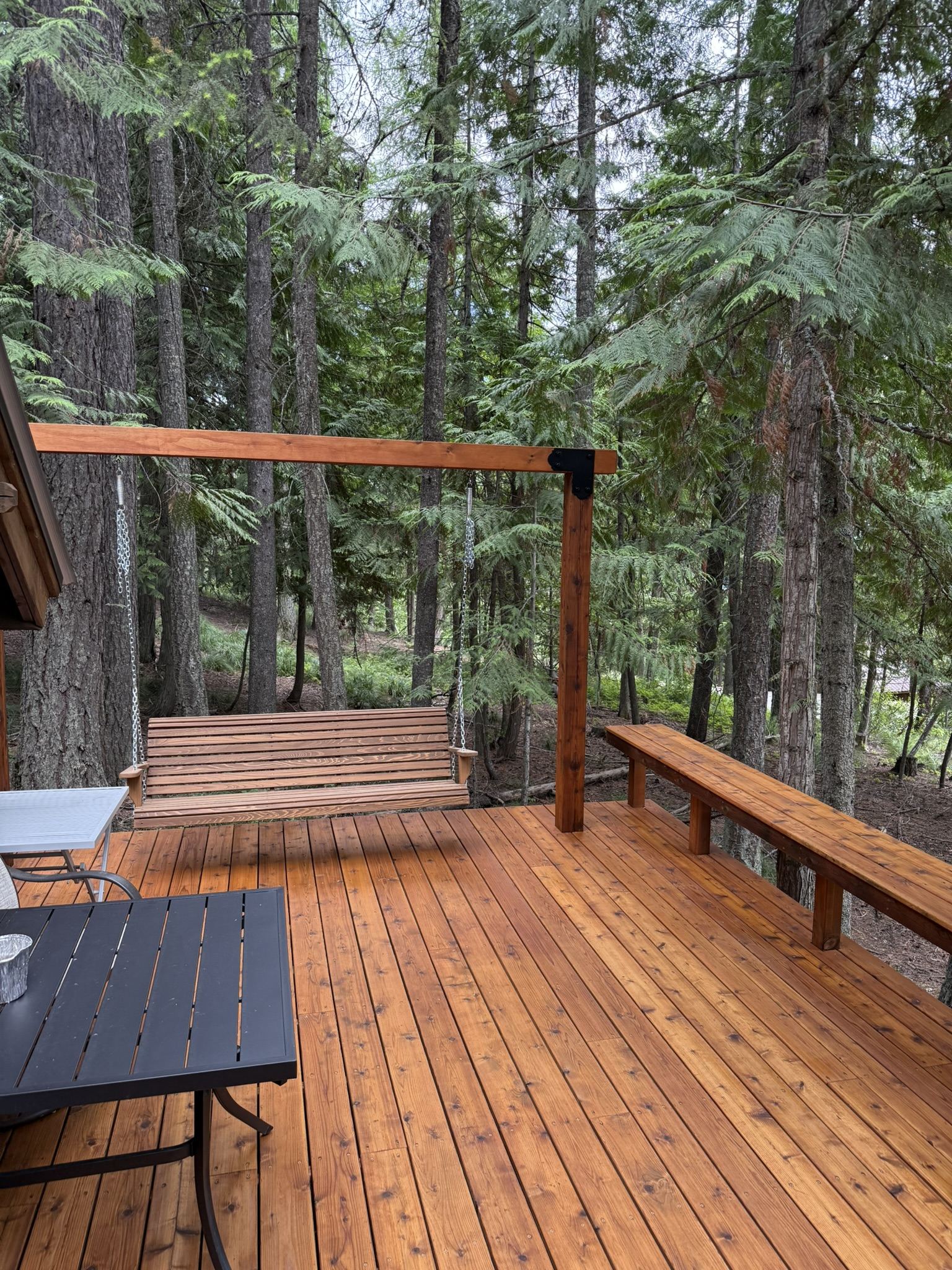
What actually drives the cost of a deck
The short answer: two decks of identical square footage can differ in price by three times. The biggest drivers are how high the deck sits off the ground, what the railing is made of, whether the existing structure can be reused, and how hard the site is to reach — not the decking boards, which are what most people focus on.
We get asked for a price per square foot constantly, and we don't give one. Not because we're being cagey — because the number would be wrong often enough to be useless. A ground-level platform off a walkout basement and an elevated deck with a stair run and cable rail are different projects that happen to share a unit of measurement.
So here's what actually moves the number, roughly in order of how much it moves it.
1. How high it sits off the ground
This is the single biggest factor and the one homeowners least expect. A deck 18 inches off grade needs no railing, short posts, and simple footings. Raise that same deck to eight feet and you've added guardrail around the entire perimeter, a stair run, taller posts with proper bracing, deeper footings to handle the load, and often skirting to close in what's now visible underneath.
Same square footage, roughly double the material and labor. On steep lots — which describes a lot of the west shore and the wooded lots around Whitefish — you don't get a choice about this.
2. Railing
Railing is where budgets quietly disappear. It's priced by linear foot, so a long, narrow deck costs more to rail than a square one of the same area.
Pressure-treated wood rail
The value option. Looks fine when new, needs maintenance, and will need replacing before the decking does.
Black metal balusters with wood posts
The most common choice we install. Costs more than wood, lasts far longer, and doesn't block the view the way a wood picket rail does.
Cable rail
The most expensive by a wide margin, and the reason is tensioning hardware, not the cable. Every run needs properly braced end posts. On a deck with several direction changes, the hardware cost climbs fast. Worth it when the view is the whole point of the deck.
3. Whether we're building new or rebuilding
If you have an existing deck, the first thing we look at is whether the frame and footings are sound. If they are, resurfacing and re-railing costs a fraction of a rebuild — you're paying for boards and rail, not excavation, concrete, and framing.
If the ledger was never flashed properly, or the footings weren't set below frost depth, that's a rebuild. We'll open it up and show you before we price it either way. In this valley, failed footings are the most common reason a deck that looks fine has to come out.
4. Decking material
This matters less than people assume, because decking is a smaller share of the total than the structure underneath it.
Pressure-treated
Cheapest up front. Moves and checks as it dries. Fine for a utility deck, and always the right choice for framing regardless of what goes on top.
Western red cedar
The best-looking option and less than composite. It wants re-staining every few years. If you enjoy that kind of maintenance it ages beautifully; if you don't, it will look tired in five years.
Composite
Costs the most up front and asks nothing of you afterward. Around hot tubs and on high-traffic decks we usually steer people here, because the maintenance you avoid over fifteen years is worth more than the difference at purchase.
5. Site access
Rarely considered, occasionally decisive. If we can back a truck to the build area, material handling is quick. If everything has to be carried around a house, down a slope, or through a gate, that's labor hours on every single delivery.
Same for concrete. A footing we can reach with a truck chute is straightforward. Footings that need wheelbarrowing down a hill cost real money.
6. Snow load and framing
Decks here carry loads that decks in milder climates don't. That means joist spacing and hardware sized for the actual conditions rather than a catalog minimum. It's not a big line item, but it's not free either — and skipping it is why some decks in the valley sag after a hard winter.
If you're planning a hot tub, tell us before we frame. A filled tub with people in it is a concentrated load far beyond a normal deck rating, and retrofitting support afterward means pulling boards you just paid for.
So what should you expect?
The honest answer is that we need to see the space. A twenty-minute walk-through tells us the height, the access, the soil, and whether anything existing can be saved — and after that we can give you a real number in writing rather than a range you'd have to guess within.
What we can tell you before we ever come out: if your lot is steep, budget more than you think. If your deck is low and the frame is sound, budget less. And if the view is the reason you're building, spend the money on railing rather than on decking — that's the choice most people get backwards.
Related deck projects
Common questions
Because the number would be misleading. Deck height, railing type, site access, and whether existing structure can be reused change the total far more than square footage does. Two decks of identical size can differ in price by three times.
Considerably, if the framing and footings are sound. Resurfacing and re-railing means paying for boards and rail rather than excavation, concrete, and framing. We check the ledger, footings, and flashing first and show you what we find.
Composite costs more up front; cedar costs less but needs re-staining every few years. Over fifteen years the maintenance you avoid with composite usually outweighs the difference at purchase, especially around hot tubs and on high-traffic decks.
Guardrail around the full perimeter, a stair run, taller braced posts, deeper footings, and often skirting. That's roughly double the material and labor of a low deck with the same square footage.
Ready to talk about your project?
Call and we'll walk through what yours would take.